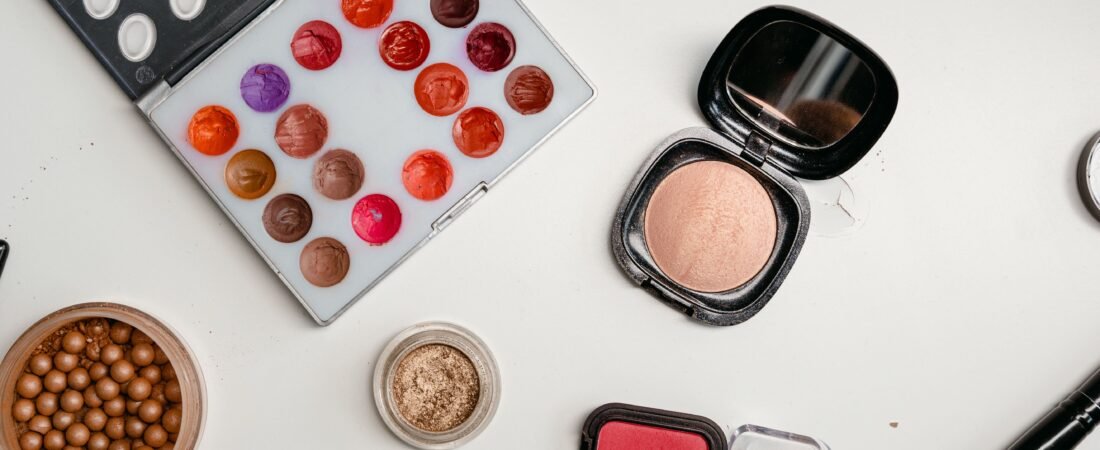
Starting makeup can be surprisingly confusing. You look up a beginner makeup kit and suddenly you’re being told you need primer, foundation, concealer, powder, blush, bronzer, highlighter, eyeshadow, eyeliner, mascara, lipstick and setting spray.
If you’re starting from zero, that can make a simple question — “What makeup should I buy?” — feel like a very expensive one.
The good news is that you don’t need to buy everything at once. A useful makeup kit for beginners can be much smaller, especially if you choose products that can do more than one job.
This article is independently researched and is not professionally or medically reviewed. Product prices and availability can change.
Some links in this article are affiliate links. If you purchase through them, we may earn a small commission at no additional cost to you.
The short answer: you don’t need a full face of makeup
There isn’t one universally correct beginner makeup kit. Your starting point depends on the kind of makeup you actually want to wear.
For a simple everyday look, you can start with a lightweight base or concealer, one cheek-and-lip colour, and one easy eye product such as kajal or mascara. Add other products when you discover that you actually need them.
That approach is different from buying every product in the order it appears in a makeup tutorial.
Current beginner guides in India vary considerably: some suggest five products, others six, seven or eight. The difference isn’t necessarily because one list is right and the others are wrong. They’re solving slightly different makeup routines.
For a beginner, the better question is: what problem does each product solve, and is that problem relevant to me?
The makeup essentials worth buying first
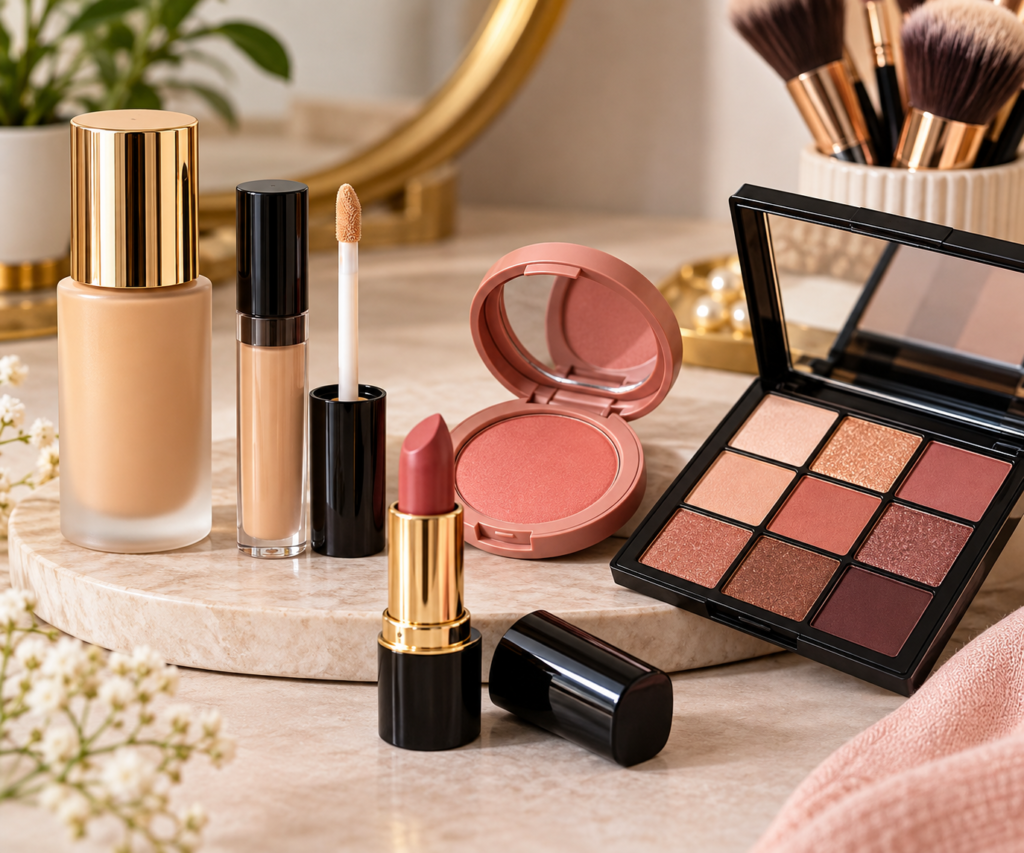
1. A simple base — but you don’t automatically need foundation
Your first base could be a BB cream, skin tint, foundation or even just concealer.
If you mainly want to even out a little redness or cover a few marks, buying a full-coverage foundation may be more than you need. A concealer can be used more selectively, while a lighter base can even out the overall complexion.
If you do want foundation, look for an easy-to-blend formula and pay attention to shade and finish rather than buying simply because something is labelled “beginner friendly.”
Try –
Maybelline’s Fit Me Matte + Poreless Foundation : Currently listed on the brand’s Indian site at ₹649* and comes in 18 shades. Maybelline describes it as a water-based, mattifying formula intended for normal-to-oily skin.
2. Concealer for targeted coverage
Concealer is useful when you don’t want to cover your entire face.
You can use it selectively around areas where you want more coverage instead of automatically layering foundation everywhere. This can also make your starter kit smaller because you may find that concealer is enough for your usual routine.
Choose the shade according to what you’re trying to do. A close skin match is generally the more straightforward choice for blemishes and targeted coverage; under-eye preferences can vary depending on the look you’re trying to create.
Try :
L’Oreal Paris Infallible Full Wear : A Liquid Concealer, Matte Finish, Longwear & Crease-Resistant, Lightweight Formula
3. One cheek colour
Blush is one of those products that can make a beginner’s kit feel more complete without adding much complexity.
You don’t necessarily need separate blush, bronzer and highlighter products on day one. A simple blush can add colour to the face and can be applied with fingers if the formula allows it.
Multipurpose products are particularly useful when you’re trying to avoid buying products that will sit unused. For example, Swiss Beauty’s Cream It Up Blush is currently listed at ₹299 on the brand’s site and is described as a multi-functional cream blush available in five shades.
The product’s current price is worth checking again before publication because promotional pricing can change.
Try :
MARS Liquid Blush Hour : A dewy and highly pigmented blush.
4. One easy eye product
You don’t need an eyeshadow palette just because every makeup tutorial seems to use one.
If you like defined eyes, a kajal is a straightforward starting point. If you prefer a more open-eyed look, mascara may be enough.
Try :
Lakme’s Eyeconic Kajal : Highly pigmented, jet black and long lasting kajal.
5. A lip product you will actually wear
This is a category where personal preference matters more than following a “must-have” list.
A tinted balm, lip tint, lipstick or gloss can all work. If you want your starter kit to stay small, a lip-and-cheek product can also reduce the number of separate products you need.
Try :
L’Oreal Paris Infallible Matte Resistance Liquid Lipstick
What can beginners skip for now?
This is where most beginner makeup lists could be more helpful.
Primer: optional
Primer can have a place in a makeup routine, but it doesn’t have to be the first product you buy.
If your existing skincare and base already work comfortably together, you may not notice enough benefit to justify adding another step.
Buy primer later if you discover a specific reason for wanting one, such as wanting a particular finish or trying to improve how your base wears.
Bronzer: optional
Bronzer adds warmth and dimension. That’s useful if you like that style of makeup, but it isn’t necessary for a basic everyday face.
If you’re still learning how to blend your base and blush, there’s little reason to make your routine more complicated immediately.
Highlighter: optional
Highlighter is a finishing product rather than a foundation of a beginner routine.
If you love a glowy look, go for it. If you’re trying to spend carefully, it can wait.
Setting spray: optional
Setting spray is another product that is often presented as mandatory in long makeup routines.
It isn’t automatically necessary for every beginner. Whether you want one depends on your routine, desired finish and how long you need your makeup to last.
Large eyeshadow palettes: probably wait
A palette containing 12, 18 or 30 shades may look like good value, but having more colours doesn’t necessarily make learning makeup easier.
One or two neutral shades can be more useful while you’re figuring out what you actually enjoy wearing.
Do beginners need primer, foundation and setting spray?
No — none of the three has to be an automatic first purchase. Foundation is useful when you want more even, all-over coverage; primer is an optional preparation step; and setting spray is mainly a finishing product. Start with the products that solve a problem you actually have, then add the others when your routine gives you a reason to use them.
That is a much more useful way to think about a beginner makeup kit than memorising a fixed product order. Brand tutorials often show a complete sequence containing primer, foundation, concealer, powder, blush, bronzer, highlighter and setting spray, but a tutorial demonstrates one possible routine rather than a mandatory shopping list.
How to build a beginner makeup kit in India without wasting money
Start with the look you want to create.
If your goal is five-minute office or college makeup, you might need only a light base or concealer, cheek colour, eye product and lip product.
If you want more polished event makeup, foundation, powder and additional eye products may become worthwhile.
If you live somewhere hot or humid, think about how comfortable you will be wearing several layers for hours. Don’t assume that adding more products automatically makes makeup last longer or look better.
Your budget matters too. Current Indian beginner guides show starter kits being built at very different price points, from roughly ₹1,000 to ₹2,000 and beyond.
Rather than setting a rigid “correct” budget, try this approach:
Buy the first three or four products you’ll use repeatedly. Learn them. Then expand.
That also gives you time to figure out your preferred finish, coverage, shades and textures before spending more.
Look for products that can do more than one job
A multipurpose product can be particularly useful when you’re starting out.
A lip-and-cheek tint, for example, may cover two categories. A concealer may reduce the need for a full-coverage base. A simple eye product may be enough without buying an entire eye palette.
This isn’t about owning as few products as possible. It’s about avoiding products that you bought because a checklist told you to.
Don’t choose a foundation shade from your hand
Foundation is one area where rushing a purchase can lead to wasted money.
Maybelline currently offers 18 shades in its Fit Me Foundation range in India, which illustrates the amount of variation available within a single product line.
If you can, compare shades on the jaw/face area rather than relying only on the appearance of your hand, and check the shade in natural-looking light. Online shade matching can be difficult, so retailer return policies and shade-selection tools are worth checking before ordering.
Common beginner makeup mistakes
Buying everything at once. You don’t know your preferences yet, so a huge haul can leave you with products you rarely reach for.
Choosing products because they’re labelled “must-have.” A product can be useful without being essential for your routine.
Buying too many shades. Start with one product in a shade you are reasonably confident you’ll wear.
Ignoring formulation and finish. “Good for beginners” isn’t enough information. Think about whether you want matte, natural, dewy, sheer or fuller coverage.
Treating influencer routines as shopping lists. A 12-step tutorial is one person’s routine, not a requirement.
Forgetting removal. If you’re buying makeup, include an appropriate removal/cleansing step in your routine rather than thinking only about what goes on.
FAQs
How many makeup products does a beginner really need?
There is no fixed number. For a simple everyday routine, you can start with roughly four or five functional categories: a base or concealer, cheek colour, an eye product and a lip product. Add powder, primer, bronzer or other products only when you have a reason to use them.
Should beginners buy primer?
Primer is optional rather than a universal beginner essential. If your existing routine gives you the finish and wear you want, you may not need another layer. It becomes more useful when you have a specific reason to add it.
Do beginners need foundation?
Not necessarily. If you only want targeted coverage, concealer may be enough. If you prefer more even, all-over coverage, foundation or a lighter base product can make sense.
Do beginners need bronzer and highlighter?
No. Both can be useful for particular makeup styles, but neither is required for a simple everyday look. They are reasonable products to add after you’ve become comfortable with your basic routine.
What should I buy first when starting makeup?
Start with the products that will solve the biggest problems in your everyday routine. For many beginners, that means a simple base or concealer, one cheek colour, one eye product and a lip product. The exact combination depends on the look you want.
The simplest way to think about your first makeup kit
You don’t need to build a professional makeup collection before you learn how to apply makeup.
Start small. Buy products that have a clear job. Look for formulas and shades that suit what you actually want to wear, and give yourself time to discover what you like.
The best beginner makeup kit isn’t necessarily the one with the most products or the lowest total price. It’s the one where most of what you bought gets used.
Some links in this article are affiliate links. If you purchase through them, we may earn a small commission at no additional cost to you.